A Natural Fence for Your Yard or Balcony: What to Know About Color‚ Upkeep and Privacy?
Why natural fencing varies in color‚ how sun and salt change it over time‚ and how to install it securely in a seaside home.
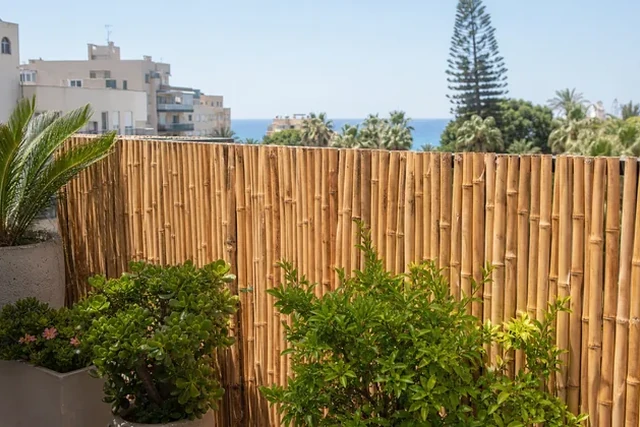
These differences are not a flaw but part of the character of a natural material‚ and if you know about them in advance you can plan properly and enjoy the fence for years. A bamboo fence‚ for example‚ is made of canes grown in different conditions‚ so each cane differs slightly in thickness and shade - and that is exactly what gives it a natural rather than industrial look. Here is what to know before choosing a natural-material fence for your yard or balcony‚ especially in a coastal area where sun‚ wind and salt affect every material.
Why Are the Shades Not Uniform?
Natural canes are harvested from plants that grew in different places and at different times‚ so their color changes from cane to cane. Some are lighter‚ others have natural spots or bands of a different color at the nodes. A single roll of fencing can contain several shades‚ and between rolls the difference can be even more noticeable. Before installation‚ unroll all the rolls and mix them so the differences spread along the whole fence instead of creating one light section and one dark section. If you want a completely uniform look‚ consider a synthetic bamboo-style fence‚ which is more consistent in color.
What Do Sun and Salt Do to a Fence?
A natural material exposed to direct sunlight gradually loses its original shade and turns a silvery gray. This is a natural process that happens to all wood and cane‚ and some people love the look. In coastal areas the process is faster because of salt and humidity. To slow it down‚ you can treat the fence with oil or a varnish made for natural materials‚ usually once every year or two. It is important to choose a product suitable for outdoor use and to apply it on a dry day‚ after cleaning off dust and salt.
Privacy: How Much Can People See Through the Fence?
Natural-material fences vary in how opaque they are. Tightly threaded bamboo gives high privacy‚ woven willow leaves small gaps‚ and thin reeds let shadows and movement show through. Think about exactly what you want to hide: looks from the street‚ the neighbors' balcony‚ or simply a sense of a sheltered corner. At the eye level of someone sitting in the yard the fence should be denser‚ while the upper part can be a more open material. Combining the fence with climbing plants increases privacy and adds greenery.
Wind and a Stable Installation
On high balconies and in yards open to the sea‚ wind is a major factor. A solid fence catches wind like a sail‚ so it must be firmly anchored to a sturdy frame of posts and crossbars. Never tie a natural fence only to an existing railing without checking that it can carry the load. Professional installation with rust-resistant wire or ties extends the life of the fence and prevents shifting and noise on stormy days.
Simple Maintenance
A natural fence does not ask for much‚ but a little attention extends its life. Rinse it with water once or twice a year to remove salt and dust‚ check for broken or loose canes‚ and keep sprinklers that wet it every day away from it. Prolonged contact with wet soil causes rot‚ so it is better for the fence to stand a few centimeters above the ground.
Summary and Recommendations
A natural-material fence adds warmth and character to a yard or balcony that is hard to get from other materials. If you know in advance about the variation in shades‚ the change in color over the years‚ the level of privacy and the effect of wind and salt‚ you can choose the right material‚ install it properly and enjoy it for many years. And in Ashkelon‚ with its sunshine and sea breeze‚ a fence like this blends in as if it had always been there.