A Sauce That Tells a Story Better Than Any Recipe
Why a good sauce is more than a topping: it is balance‚ time‚ memory‚ tradition and the feelings of the person who cooks it.
The Meaning of the Bond Between Ingredient and Flavor
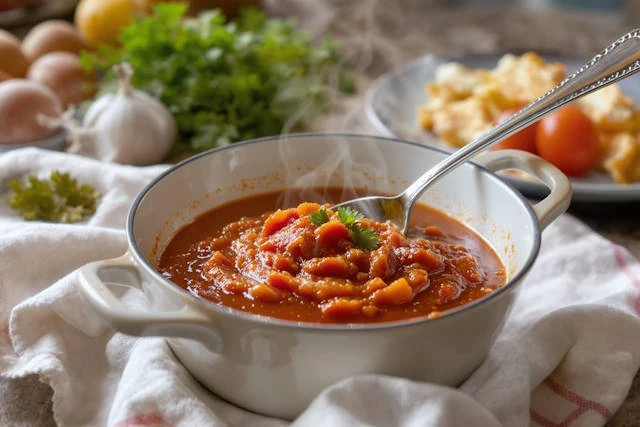
A sauce is much more than an add-on - it is the heart of the dish. It connects the ingredients‚ unites the textures and gives every bite extra depth. When it is made with thought‚ it tells a story about the place where it was born‚ about the people who created it and about the moments that come back every time it is prepared on the stove or in the oven. A good sauce is like a personal signature of the kitchen - not something that can be copied exactly‚ but a creation that holds emotion and experience.
Choosing Ingredients That Express Identity
Every cuisine in the world carries an identity - the aroma of garlic and pepper in the Middle East‚ the smoothness of olive oil around the Mediterranean‚ the gentle heat of chili in Southeast Asia. The sauce is where this identity is expressed most fully. Choosing ingredients not only for taste but also for their story creates an experience greater than the sum of its parts. A sauce based on local produce tells a story of the land‚ of tradition and of people who continue the path of earlier generations without feeling the need to change everything.
The Importance of the Right Balance
A good sauce requires a precise balance of intensities. Gentle acidity balances sweetness‚ a hint of heat opens up the flavor‚ and quality oil wraps it all together and adds richness. This is not only a culinary matter but an expression of an approach to life - the understanding that you do not need extremes to create something perfect. The balance between ingredients is like a relationship between people: each side contributes something of its own‚ and together they create a harmony that cannot be reproduced exactly.
The Effect of Time and Patience
Like many good things‚ a good sauce takes time. Flavors are not born instantly - they build slowly‚ blend and settle. Patience is the hidden ingredient that cannot be measured with a spoon. When a sauce is given time to simmer‚ soften or thicken‚ it absorbs the character of the person who made it. This is not just chemistry but also an emotional process - waiting‚ anticipation and a sense of creation that unfolds at its own pace.
The Link Between Memory and Taste
Some sauces take you straight back to distant moments - a Shabbat table‚ a trip abroad‚ an old family gathering. Taste is a bridge between times‚ and it can bring back memories in a way no other sense can. A sauce you know from childhood is not just a taste - it is a feeling of security‚ nostalgia and sometimes even longing. When you cook it the same way‚ a connection forms between past and present‚ between those who ate it then and those who eat it now.
Choosing Conscious Simplicity
There is a special magic in simple sauces. The ones that do not need a long list of ingredients but rely on the right combination of a few basic flavors. Simplicity like this is no accident - it comes from a deep understanding of what really matters. Those who can make a good sauce from a handful of ingredients understand that real flavor does not depend on abundance but on balance and intention. A simple sauce is not culinary poverty - it is a sign of maturity.
The Influence of Environment and Culture
The sauce of every place is a mirror of the culture that created it. In cold regions‚ sauces are heavy and warming; in hot places‚ they are light and fresh. Some sauces were born to preserve food‚ others to enrich it. Culture shapes taste‚ but the reverse is also true - a particular sauce can become a cultural symbol and an inseparable part of a collective identity. In Israel‚ for example‚ the combination of tahini‚ lemon‚ garlic and olive oil is not just a flavor - it is a statement of place.
The Importance of Feeling in the Work
You can tell when a sauce is made without feeling. It may be precise‚ but it lacks soul. When there is feeling‚ on the other hand‚ every stir and every taste takes on a different meaning. This is the difference between technical cooking and true creation. Feeling in cooking is that hidden ingredient that cannot be copied even with an exact recipe. It is what turns a good taste into a taste that stays in your memory.
The Connection Between Family‚ Tradition and Time
In most homes‚ there is one sauce that is passed down from generation to generation. It is not always written down - sometimes it is only described‚ or the quantities are passed on "roughly". It is a family story seasoned with years of experiences. Every time it is made again‚ it tastes a little different but still keeps the same heart. In this way it becomes a bridge between people‚ eras and emotions - a living recipe that is updated along with life itself.
The Ability to Tell a Story Through Aroma
Sometimes‚ even before you taste it‚ the aroma already tells the whole story. The smell of a good sauce spreads through the kitchen‚ drifts out the window to the neighbors and makes people feel part of something warm and homey. The aroma sparks curiosity and the expectation of something familiar yet surprising. This is the stage when memory starts to work‚ even before the spoon touches the sauce. It is proof that a culinary story does not begin on the plate - it begins in the air.
The Effect of Sharing and Attention
When you cook a sauce with someone else - a family member‚ a friend or a colleague in a professional kitchen - shared learning takes place. Each person adds a little something of their own: a tip‚ a habit‚ a preference. The sauce becomes a shared language that connects people. Mutual attention while working lets the flavors blend on a human level as well‚ and strengthens the understanding that food is first and foremost a shared experience.
Summary
A sauce that tells a story better than any recipe is proof that good taste is not the result of science alone but of humanity. It is born from a combination of time‚ attention‚ memories and love for the craft. It is a reminder that every dish‚ even the simplest one‚ can become a full experience when it is built with thought and feeling. In the end‚ a good sauce is not just a flavor - it is a way to tell a story without words‚ to pass on a tradition without a speech and to remind us that in every small pot on the stove lies a whole world of meaning.