Returning to Creativity in Midlife: Why More Adults Are Choosing Group Settings?
Why more adults in midlife return to creative work in a group‚ and what makes such a setting safe‚ lively and worthwhile.
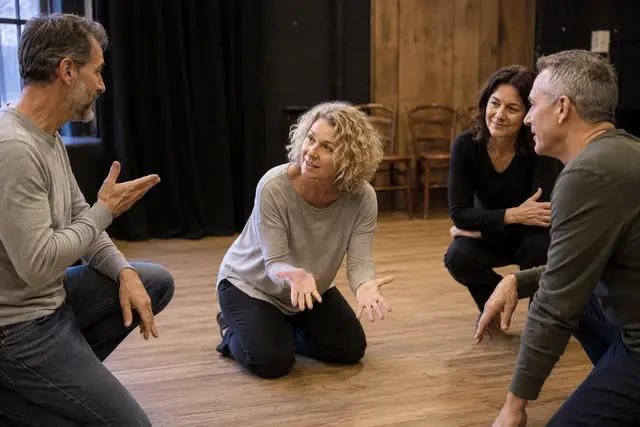
One option is an acting class for adults‚ where you can work with voice‚ body‚ imagination and scene partners even without previous experience. The value is not measured only by the ability to play a character. The process invites listening‚ responding in real time and agreeing to be seen before everything is polished. For adults used to having the answers‚ simply returning to the position of a beginner can be refreshing and challenging at the same time. Choosing a group setting creates an opportunity to return to creativity without carrying the whole process alone. The regular meeting provides time and place‚ and the presence of others turns the experience from a postponed wish into real action. Still‚ the value depends not only on the activity itself but also on the group climate‚ the pace and how safe participants feel being imperfect.
What Changes in Midlife?
Over the years a clear professional and social identity takes shape. We know what is expected of us and in which areas we are considered good. That stability is important‚ but it can narrow the space for experimenting. A creative activity brings back the possibility of acting without the performance being immediately tied to reputation‚ income or responsibility toward others. The relationship with time changes too. Young people may choose a class out of a dream for the future‚ while many adults come out of a wish for an experience in the present. They don't have to know where it will lead. The weekly class itself‚ the meeting and the small progress are the reason to come. Progress also shows in the ability to recover‚ not only in a clean performance. Getting back on track after a mistake is a skill in its own right‚ and it gives stability in situations where you cannot control every variable.
The Group as a Mirror and a Safety Net
Creating alone allows privacy‚ but a group adds response. Another person listens‚ offers an idea and changes the direction. Through the meeting you can recognize habits: who rushes to lead‚ who withdraws‚ who struggles to accept a suggestion and who forgets to speak up. The insights come from doing‚ not from abstract analysis. For the group to be safe‚ clear rules are needed. There is no room for mockery‚ competitive comparison or pressure to reveal personal material. A good facilitator builds the pace gradually‚ allows choice and holds the line between challenge and overwhelm. Safety is not the absence of embarrassment; it is knowing that even an awkward moment will be received with respect. Practice is more useful when it is small and repeated than when it is saved for a big event. Five minutes on a regular basis let the body and mind get to know the situation‚ so that when it matters less energy is needed just to get started.
The Body Rejoins the Conversation
Much of an adult's day happens in front of screens and inside one's head. Stage work brings attention back to posture‚ breathing‚ rhythm and the distance between people. The body is not decoration for the words; it is part of the message. When you learn to feel it‚ you can notice tension earlier and choose how to move outside class as well. You don't need a dancer's flexibility or an athlete's fitness. The work can be adapted to a range of ages and abilities. What matters is a respectful attitude toward the body you have‚ without trying to pretend it is different. Sometimes it is precisely the limitations that produce creative and precise choices.
Mistakes as Raw Material
In many areas of life‚ a mistake is measured by its cost. In creative work it can become a new direction. A forgotten word‚ a late entrance or an unexpected reaction force you to stay connected to the moment. Gradually a greater tolerance for uncertainty develops - not because mistakes disappear‚ but because you already know you can carry on from them. This approach does not cancel preparation. It changes the attitude toward the result. You prepare seriously‚ and then agree to meet whatever actually happens. For those who tend toward perfectionism‚ the practice can offer freedom: you can be committed without demanding full control.
Connections That Are Not Based on Roles
In a creative group‚ people from different fields and ages meet. They don't necessarily know each other's professional role‚ so the connection starts from the shared activity. Such an encounter can be rare in adulthood‚ when most acquaintances come through work‚ parenting or the neighborhood. Friendship is not guaranteed‚ nor is it a condition for the setting to succeed. A temporary sense of belonging and enough trust to work together are sufficient. Over time a group language develops‚ along with shared memories and the ability to recognize the path each person has traveled. These give the weekly meeting a meaning beyond the exercise itself.
Choosing the Right Setting
It is worth checking who the group is meant for‚ how big it is‚ what experience the facilitator has and what the balance is between practice‚ text and feedback. A trial class can help‚ but it does not always reflect the whole process. Ask how beginners join‚ whether a performance is expected and what happens to someone who doesn't want to perform. Logistics matter too. A distant location or a time that doesn't fit your routine will be hard to keep up‚ even if the content is excellent. A mature choice is not just "what is best" but what you can attend regularly. A run of several months gives the work a depth that a one-time meeting cannot.
The Balance Between Challenge and Belonging
A good setting does not leave participants in their comfort zone‚ but it does not use embarrassment as a test of courage either. The challenge should come in doses that can be processed: a short task‚ sharing by choice and feedback that addresses the action rather than the personality. At the same time it is important to create steady signs of belonging‚ such as a familiar opening‚ a fair division of time and clear rules for listening. The combination lets a person try something new knowing that even if they get confused‚ their place in the group is not in doubt. That way confidence is built from accumulated experience‚ not from a promise to feel comfortable right away.
In Summary
Returning to creativity in midlife is not a retreat into youth but a choice to expand the present. A group makes it possible to experiment‚ listen‚ make mistakes and meet people without relying only on familiar roles. When the setting is professional‚ respectful and fits your routine‚ it can become a weekly point in time where curiosity once again gets a real place. Confidence is built from small repetitions‚ focused feedback and the ability to get back on track after a mistake. That way creativity remains a movement you can practice‚ not a trait you either have or don't.